
Start a Council Bluffs Residents Directory Search
A useful search begins with the kind of clue available. A street address points first to the Pottawattamie County Assessor and county GIS. A full name can be tested against the assessor, Iowa Courts Online, the Iowa voter lookup, recorded-document indexes, and specialized state databases. An older name belongs first in the Council Bluffs Public Library's directory and newspaper collections. None of these is a complete population list. Owners may live elsewhere, registered voters omit nonvoters, and directory volumes miss people who were not recorded in that edition.
The Council Bluffs residents directory works best as a comparison process. Record the spelling, date, address, and source shown by each hit. A shared name is not enough to merge two records, while a matching middle initial, parcel, spouse, or legal description can make the connection much stronger.
- Search the county property roll by owner name or Council Bluffs address.
- Use the Iowa voter tool when a first name, last name, and ZIP code are known.
- Check the Recorder's modern AVA portal or historical grantor and grantee books.
- Move to library city directories, newspapers, obituaries, and census material for an earlier household.
- Ask the custodian for a public record that is not indexed online under Iowa Code Chapter 22.
Council Bluffs Residents Directory Offices
Council Bluffs is the Pottawattamie County seat, so many of the most useful custodians are concentrated at the county courthouse. The Recorder keeps deeds, liens, marriage material, and qualifying vital certificates. The Assessor links names to taxable parcels. The Auditor manages real-estate transfer records and elections information, while the Clerk of Court supports public case access. City Hall adds ordinances, permits, licenses, contracts, and information requests. For a whole named road, the Council Bluffs street directory explains how these address sources fit together.
Pottawattamie County Recorder
227 S 6th Street
Council Bluffs, IA 51501
712-328-5612
Council Bluffs Residents Directory Property Cards
The county Assessor is usually the fastest official starting point for a present address. Its form accepts owner name, property address, town or ZIP, and parcel number. A result can expose the owner, situs address, tax mailing address, legal and tax descriptions, assessed values, exemption flags, sales history, and a parcel map. The mailing address can differ from the physical site, so it should not be read as proof that the owner occupies the building.
| Assessor field | Best use | Important limit |
|---|---|---|
| Owner name | Find parcels held by a named person or entity | Spelling and ownership form matter |
| Property address | Identify the assessed owner of a site | Does not list every occupant |
| Town or ZIP | Narrow similar streets and names | Mailing geography may cross city limits |
| Parcel number | Return to one exact tax unit | A parcel is not always one household |
Council Bluffs Residents Directory Record Terms
Office vocabulary helps prevent false conclusions in a residents directory. A roll is an official list maintained for a defined purpose, such as taxation or voter registration. An index points to a filing and may not include the document image. A parcel is a mapped tax unit with a legal description, not a promise that one family lives there. A criss-cross directory reverses the usual name order and groups entries by street and house number. These sources were built to administer records, not to produce a universal people list.
Source check. Treat an index as a lead and confirm the underlying card, filing, image, or volume with its custodian.
Present-Day Council Bluffs Residents Directory Sources
Current official sources differ in who appears and what a match proves. The property roll names owners, the recorded-document system names parties to filings, and the court docket names parties in public trial cases. The voter interface is designed to confirm registration and polling information from a known identity. The city department directory is narrower still, listing public personnel and routing contacts rather than the public at large.
| Local source | People represented | Custodian | How to access it |
|---|---|---|---|
| Property assessment roll | Owners and ownership entities | Pottawattamie County Assessor | Free web search or office help |
| Voter registration lookup | A known registered voter | Iowa Secretary of State and County Auditor | First name, last name, and ZIP online |
| Recorded documents | Grantors, grantees, and filing parties | Pottawattamie County Recorder | AVA, historical index books, or counter |
| Court docket | Parties in public state trial cases | Iowa Judicial Branch | Iowa Courts Online or courthouse terminal |
| City staff directory | Municipal departments and personnel | City of Council Bluffs | Free city directory |
A careful Council Bluffs resident lookup starts with the source most likely to contain the person, then verifies the result elsewhere.
The Council Bluffs Residents Directory Deed Trail
Land and filing research splits at 1989. The Pottawattamie County Records site provides scanned grantor and grantee index books from 1853 through 1989, organized by book category, year, and letter. Documents after 1989 route to the Recorder's AVA system. Iowa Land Records offers another statewide route after free account registration. The Recorder warns that staff cannot perform a title search, but the office can explain access and copy procedures.
A name found in an index is a party to a recorded transaction, not automatic proof of residence. Follow the book and page or document reference to the filing, compare its legal description with the Assessor parcel, and note the recording date. The Auditor's transfer and plat records can help when ownership moved, a parcel split, or a subdivision name changed.
Council Bluffs Residents Directory Voter Clues
The Iowa Secretary of State Voter Registration Search currently asks for first name, last name, and ZIP. It is useful for confirming a likely Council Bluffs registration and finding polling information, but it is not a browseable citywide surname directory. Public inspection and voter-list distribution are separately governed by Iowa Code sections 48A.34, 48A.38, and 48A.39. A full list request uses a defined request process, fees, formats, and purpose restrictions.
Protected addresses require special care. Iowa Safe at Home, created under Iowa Code Chapter 9E, can shield voter-registration and address information for qualifying survivors. An absent address may reflect a legal protection or simply a source that never collected the person. It should never be filled with a guess.
Court Checks in the Council Bluffs Residents Directory
Iowa Courts Online supplies a statewide electronic docket record search for public trial-court cases. Search controls include name and case information, and public results may show the case number, county, parties, charges or claims, events, and disposition details allowed for online display. The Pottawattamie County Clerk of Court and courthouse terminals are the local fallback when more public document access is available at the counter than on the web.
The Iowa Courts Online search is the official statewide starting screen.
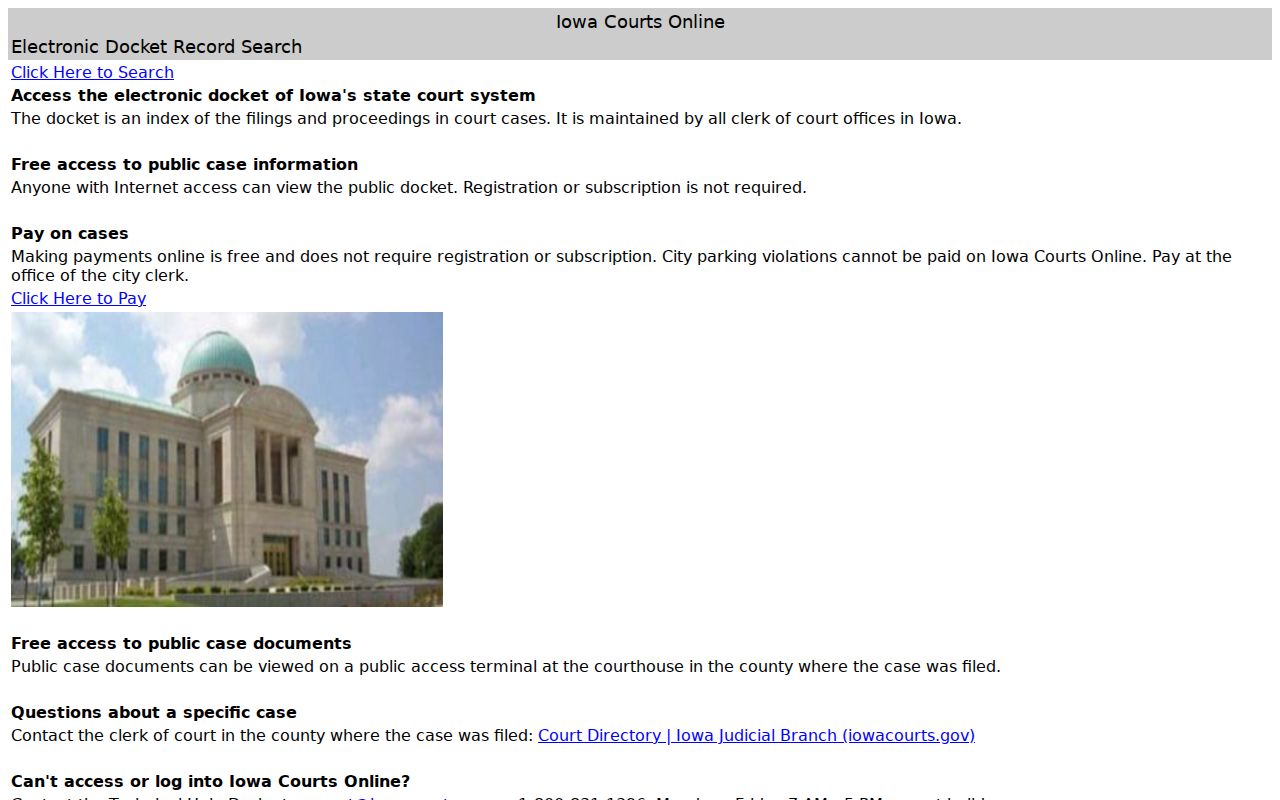
A docket match is evidence of a case under a name, not proof that the person now lives at a Council Bluffs address. Compare the county, middle name or initial, dates, and any address clue that is legitimately public. Federal matters tied to the Western Division use PACER and the Southern District of Iowa courthouse rather than the state portal.
Vital Records in a Council Bluffs Residents Directory Search
The Pottawattamie County Recorder is the local registrar for qualifying birth, death, and marriage certificates, while Iowa HHS handles statewide copies, genealogy searches, and events outside county authority. The current HHS certified-copy route lists a $20 search and copy fee and requires identification and, for some channels, notarization. Iowa Code section 144.43 closes state-held vital records except for authorized access and sets archival thresholds.
The Iowa HHS request guide shows the official channels and proof requirements.
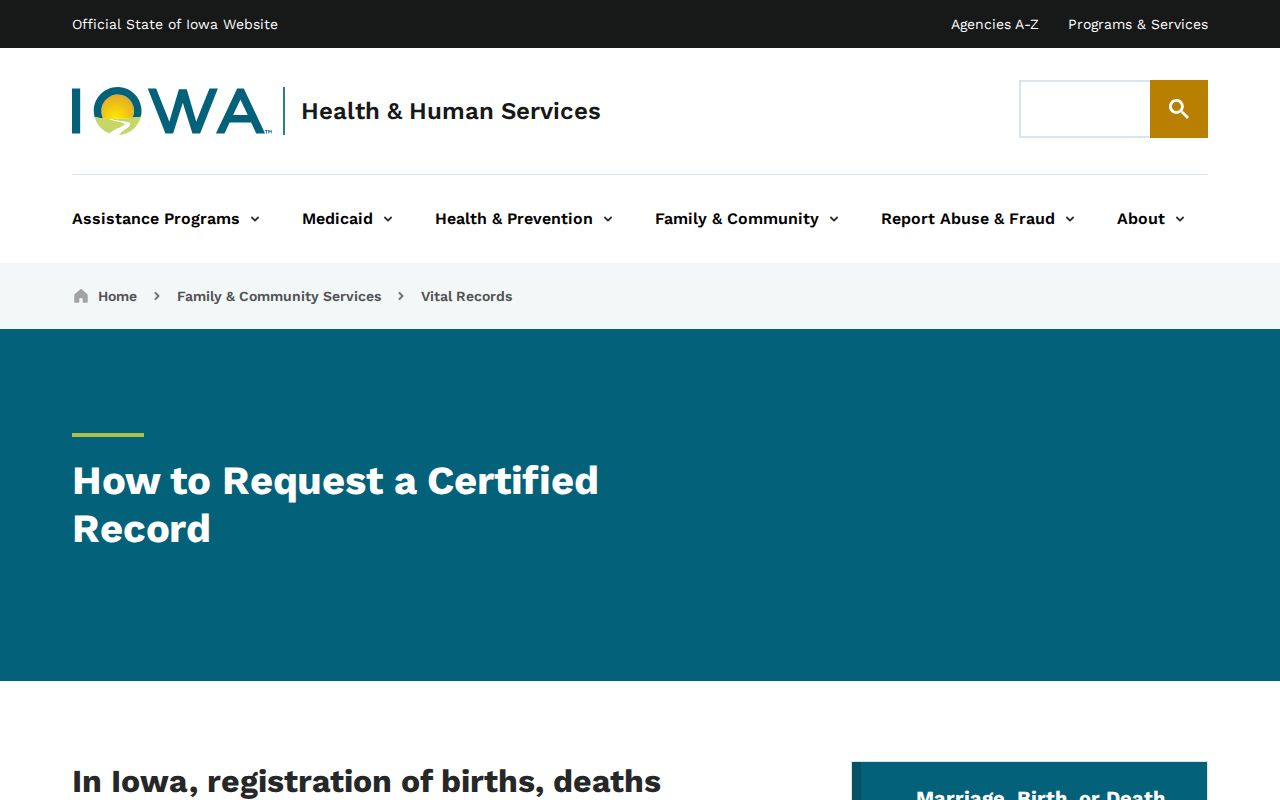
The guide is a reminder that an index clue and a certified certificate are different products with different access rules.
Official Rolls and Commercial Search Results
Official portals are narrow but accountable. Each has a named custodian, a defined record purpose, and a correction or request channel. Commercial people-search tools may merge public records, marketing data, and older address associations into a single profile. That can be quick for discovering a spelling or possible connection, but the result may blend two people or preserve an obsolete address.
Official record path
Best for confirming one fact in the assessor roll, recorded index, docket, or voter system. Check the date and custodian.
Commercial category
Best treated only as an unverified lead. Costs, coverage, correction tools, and data age vary by provider.
Lawful personal use. Never use a Council Bluffs residents directory to stalk, harass, intimidate, or harm another person.
Public Safety Sources for Council Bluffs Resident Searches
Law-enforcement records should not be collapsed into a general identity profile. The Council Bluffs Police public portal accepts requests for investigative files, local criminal-history material, published records, and request-status searches. The Pottawattamie County Sheriff maintains an inmate roster with custody warnings, while the Iowa Department of Corrections has a separate offender search. The Iowa Sex Offender Registry provides name, alias, ZIP, map, telephone or email search, and notification tools.
The Council Bluffs Police records portal shows the city's request route.
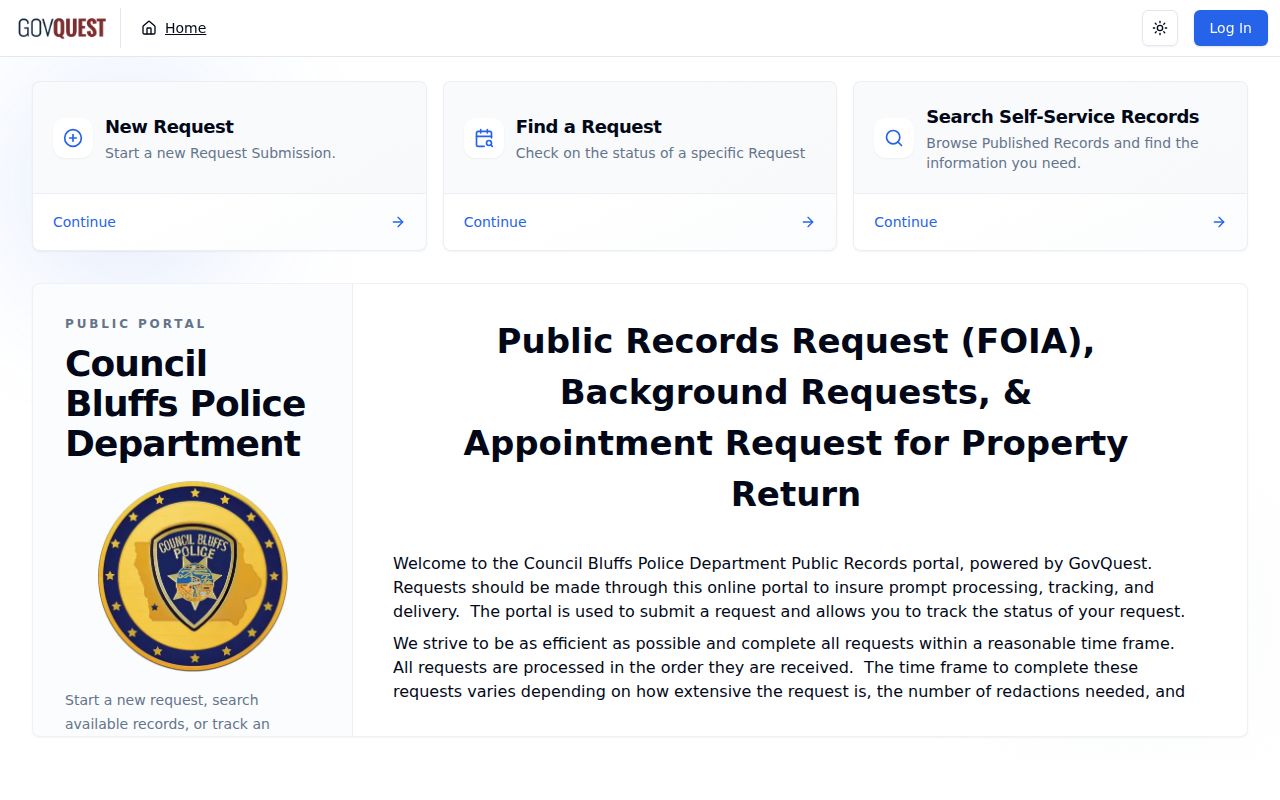
Requests belong with the agency that created the record, and a custody listing is time-sensitive rather than a permanent statement about a person.
The Iowa Sex Offender Registry provides its own public search and notification tools.
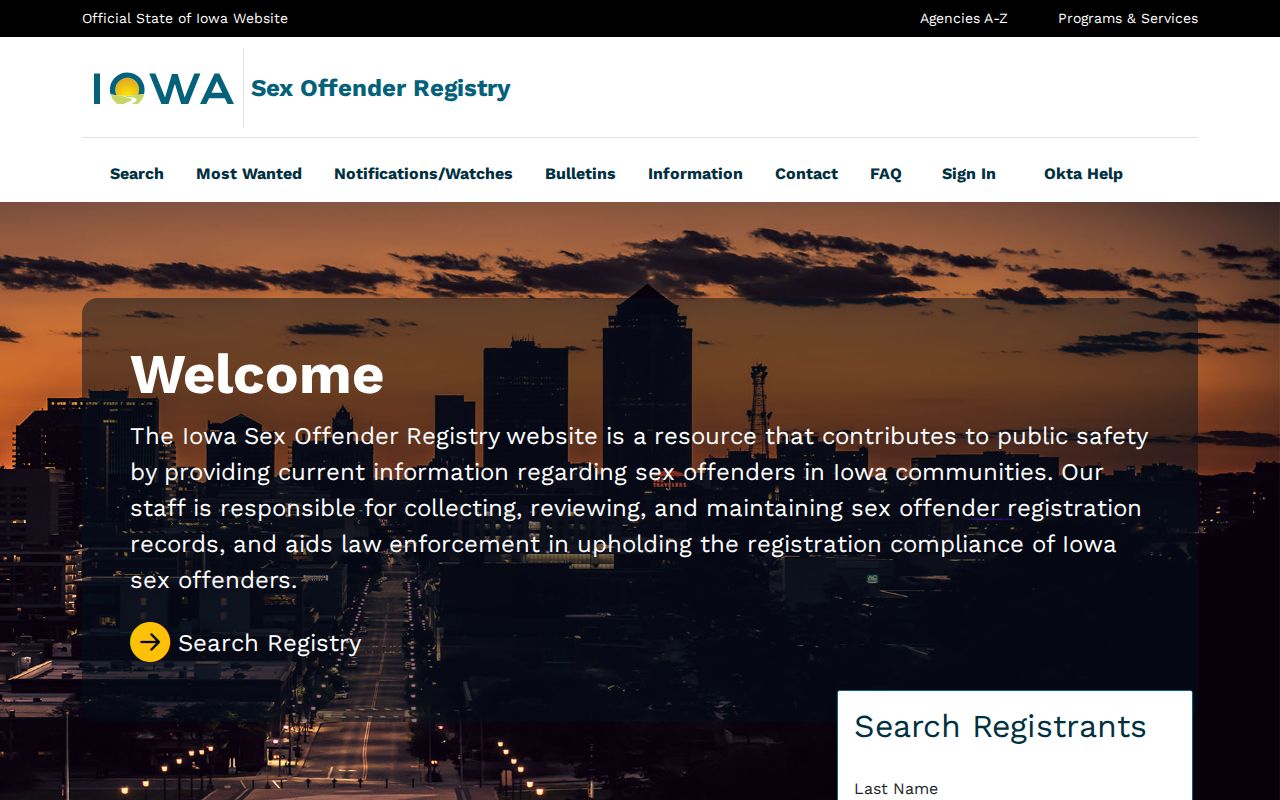
Registry results must be read with the state's current record details and map limits, not combined with unrelated directory profiles.
Older Council Bluffs Residents Directory Collections
The Council Bluffs Public Library has unusually deep local material. Its Iowa Room holds city directories beginning in 1866, telephone books, census resources, cemetery material, newspapers on microfilm, obituary help, yearbooks, and genealogy databases. The library's digital archive includes photographs, documents, yearbooks, and special collections. Digitized Polk and earlier city directories can be browsed by item, while the Pottawattamie County Genealogical Society's Frontier Heritage Library adds directories, maps, obituaries, legal files, and family-history sources.
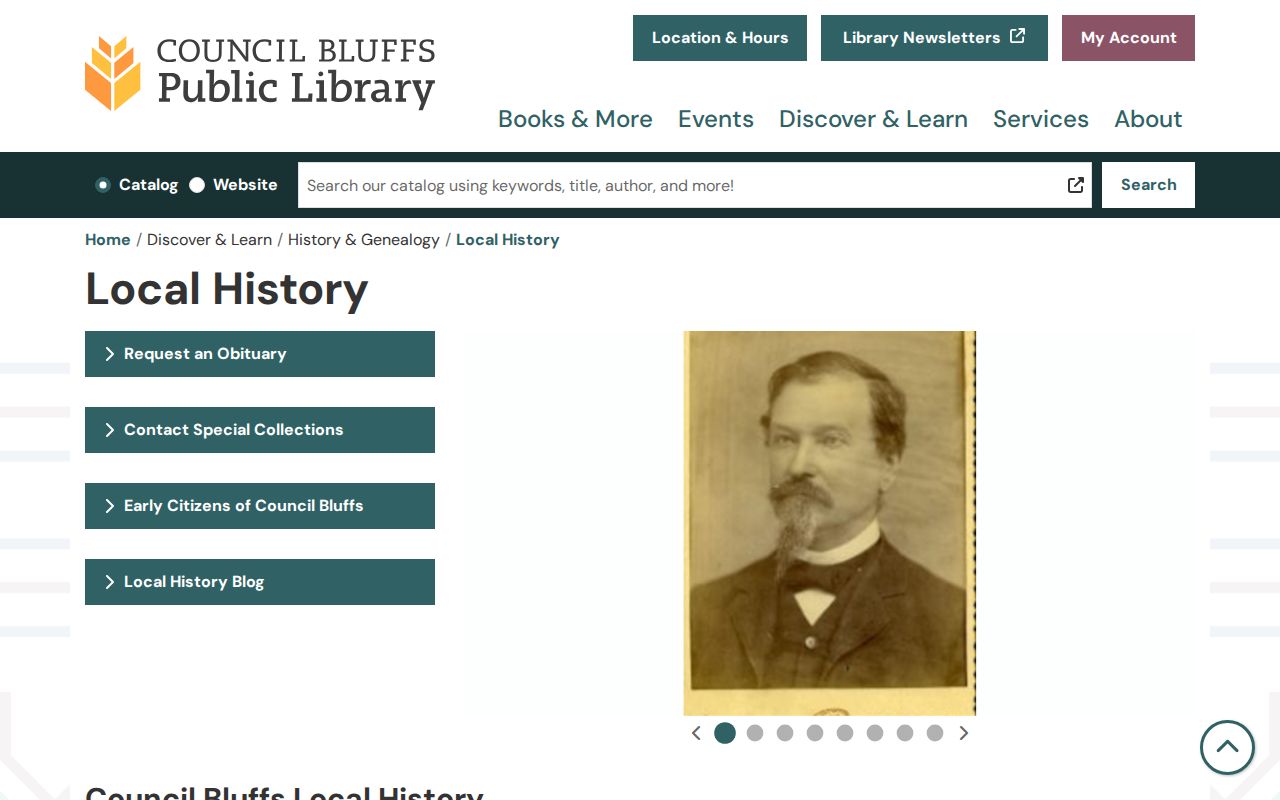
The Council Bluffs Library local-history guide introduces the Iowa Room and its research support.
These shelves can reveal an occupation, spouse, address, or household sequence that a present-day portal cannot supply.
From Kanesville Records to Council Bluffs Indexes
Local names and jurisdictions matter in early searches. The settlement was known as Kanesville before becoming Council Bluffs, and Pottawattamie County's organization and county-seat history shaped where records were filed. A search limited to the modern city name can miss newspapers, directories, maps, and official entries cataloged under the older name. The State Historical Society of Iowa lists Pottawattamie County record series covering deeds, probate, naturalization, vital records, and census material for periods not always available from one local web portal.
Sanborn fire-insurance maps from 1885 and 1896 add a building-by-building frame. They can show a structure and street pattern near the date of a directory entry, but they do not name every occupant. Pairing a map sheet with a directory, deed index, census schedule, and newspaper makes the historical claim stronger.
Council Bluffs Residents Directory Census Clues
Federal census schedules provide a different kind of household evidence from tax rolls and deed indexes. The National Archives makes the 1950 Census images searchable after the 72-year confidentiality period. A search can begin with a name, but older handwriting, OCR errors, initials, and changed spellings make enumeration districts and address clues important. Council Bluffs researchers can use a known street from a city directory to identify the right census area, then inspect nearby schedule lines for the rest of the household.
Census residence reflects one official enumeration date. It does not prove that the household stayed through the full decade. A sound sequence compares the schedule with the nearest Council Bluffs city directory editions, the Assessor or deed chain when the address survives, and newspaper notices around any apparent move. For earlier material, the State Historical Society of Iowa's Pottawattamie County holdings and the public library provide offline routes when a name-only web search fails.
Cemeteries Extend the Council Bluffs Residents Directory
Fairview and Clark Cemetery records can extend a trail after a person disappears from a residential roll. The City of Council Bluffs describes both cemeteries and routes burial questions through the City Clerk. The library's genealogy collection includes cemetery resources, death information, obituary assistance, and newspapers on microfilm. Its digitized genealogy collection adds death transcripts and burial material that can reveal name variants or family links.
A burial record should be paired with an obituary, death index, probate file, or certified record when the research question requires confirmation. Cemetery memorials may use nicknames, omit a prior surname, or group relatives who did not share a Council Bluffs address. Probate is handled through the district court record trail, while certified death records follow Iowa HHS and Recorder entitlement rules. Together, these sources help explain why a name leaves the Council Bluffs residents directory without pretending that one burial entry tells the whole household story.
Recent Pottawattamie Record Alerts
The county has expanded record-awareness services. The Recorder offers a free Property Fraud Alert that sends notice when a document indexed to an enrolled name is recorded. A Notary Fraud Alert launched in October 2025 and reports filings tied to enrolled notary information. Traveling Recorder office hours began later in 2025 to bring selected services to communities across Pottawattamie County.
Alerts are not ownership insurance and do not stop a filing. They are early-warning tools that can prompt a person to inspect the indexed document and contact the Recorder. For Council Bluffs residents directory work, they also show why recording dates and exact indexed names deserve attention: new filings continue to change the public trail.